A garage door sensor yellow light often means the sending sensor has power, but it does not confirm the door is safe to close. The other sensor must receive the beam, and the opener must respond as expected. In Easley, check for dirt or objects first, then stop if the door behaves in an unsafe way.
A door that will not close can leave a home or business open to the weather and unwanted entry. The small sensor lights may be hard to read, especially when they blink or change color. A few careful checks can help explain what is happening, and show when a trained technician should take over. Dust, damp weather, or a sensor that has been bumped may affect how well it works in Easley.
Table of Contents
- What does a yellow garage door sensor light mean?
- Why is my garage door sensor light blinking?
- How do garage door safety sensors work?
- What should I check when the sensor light is yellow or blinking?
- How do I clean garage door safety sensors?
- How do I realign garage door sensors?
- Why won’t my garage door close even when the sensors look aligned?
- Can I bypass garage door safety sensors?
- How can I test whether the sensors are working correctly?
- When should I call a garage door repair technician?
- Frequently Asked Questions
What does a yellow garage door sensor light mean?
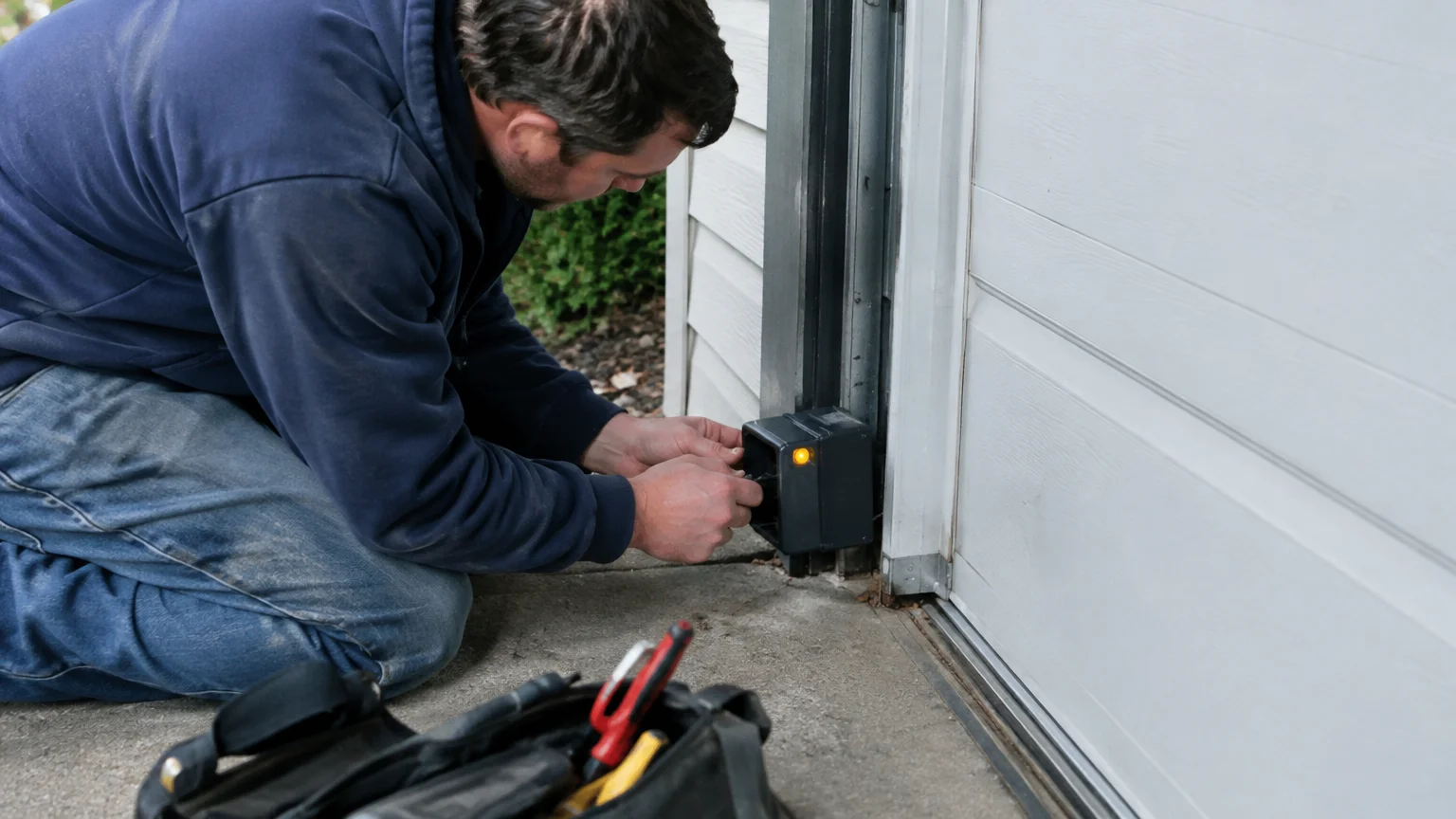
A yellow light often appears on the sending sensor, which sends an unseen beam across the doorway. On many systems, the light stays steady when that sensor has power. A yellow light alone does not show that both sensors work. The other sensor must read the beam, and the opener must react as it should.
Why sensor light colors vary by manufacturer
Garage door opener makers do not all use the same light colors. One brand may use yellow for the sending side and green for the receiving side. Another may use other colors, or show a light only when the beam is clear. The light’s meaning depends on the opener and sensor model. Check the opener manual for the right meaning for your system.
A blinking light may point to a weak signal, blocked beam, loose wire, or sensor that has moved. It does not always mean the sensor is broken. If one light stays on while the other is dark or blinking, the receiver may not be reading the beam. Check for dirt or nearby objects before you think a part has failed.
How to identify the sending and receiving sensors
The sending sensor makes the beam, and the receiving sensor reads it. They sit near the bottom of the door tracks and face each other across the opening. The manual, sensor label, or wire connection may show which is which. The sensors can look alike, so do not guess by their shape alone.
If you do not have the manual, the opener maker’s label may help you find its model. Easley Garage Door Repair can help homeowners and property owners understand odd sensor lights. A steady yellow light may be normal on some systems, while a blinking light or dark receiver may need a closer look. Check for objects and dirt before moving a sensor.
Why is my garage door sensor light blinking?
A blinking sensor light can mean the beam is blocked or the sensors do not face each other. It can also point to a loose connection, damaged wire, or weak power. The blink pattern matters, and it can differ by opener model. Check the manual before you treat a certain number of blinks as a fault code.
What intermittent blinking can indicate
If a light blinks only when the door moves, the sensor may shift as the door or track moves. A loose bracket or shaking may affect the beam. The light may also blink when a leaf, tool, bin, or cobweb crosses the beam. Look around the sensors without touching moving door parts.
Damp air and dust can also affect sensor parts. If the door starts to close and then goes back up, the opener may not be able to read the beam. Do not keep pressing the remote to force the door shut. Repeated tries can hide the cause and leave the door in an unsafe place.
How to distinguish a sensor issue from a power problem
First, check whether the opener lights and wall control work. If the opener has no power, a sensor light may be dark because power is missing. If the opener works but one sensor light is out, the issue may be with that sensor, its wire, or its connection. A tripped breaker or unplugged opener can also stop the system.
Check only plugs and switches that you can reach with ease. Do not open the opener cover or touch bare wires. If the opener and both sensor lights flicker, there may be a wider power or wire problem. Garage Door Opener Repair may help when simple checks do not explain odd opener behavior. Stop if a wire looks cut, pinched, or worn.
How do garage door safety sensors work?
Garage door safety sensors send an unseen beam across the doorway. The receiving sensor watches for that beam as the door closes. If something blocks the beam, the opener should stop the door and send it back up. This safety feature helps keep the door from closing on a person, pet, or object.
How the infrared beam detects an obstruction
Infrared light is light people cannot see. One sensor sends it, and the other sensor receives it. When the path is clear and both sensors face each other, the receiver can read the signal. A box, person, pet, or dirt on a lens can block the beam. The opener may then treat the doorway as blocked.
The sensors are often set low on each side of the opening. Their low position helps them detect things near the floor. It also means stored items, cleaning tools, or a tire can bump them. Keep the space in front of both sensors clear. Do not hang items where they could cross the beam.
Why the door reverses when the beam is interrupted
The opener is made to stop or reverse when it cannot confirm that the beam is clear. That is a safety action, not a sign that the door is being difficult. If the door reverses when something blocks the beam, it may be working as it should. Never defeat that safety feature just to close the door.
The sensors are one part of the garage door system. The opener, tracks, rollers, springs, and cables also affect how the door moves. A door that moves unevenly or makes a harsh sound may have another problem. Do not pull, lift, or force a heavy door that seems stuck. Garage Door Maintenance can help keep the system in good shape, but a damaged door needs repair before use. A good garage door seal can help keep out dust and weather, but it does not fix a sensor fault.
What should I check when the sensor light is yellow or blinking?
Start with simple checks around the sensors. Look for objects in the beam, dust on the lenses, and a sensor that seems to have shifted. Do not touch springs, cables, or brackets attached to the door’s lower corners. If a wire looks damaged or the door moves in an unsafe way, stop and call a technician.
Check for objects, dirt, and cobwebs near the beam
Look across the doorway at sensor height. Move only loose items that are safely out of the door’s path. Check for leaves, bins, tools, toys, or cobwebs near either sensor. A small object can block the beam even when the floor looks clear from inside the garage.
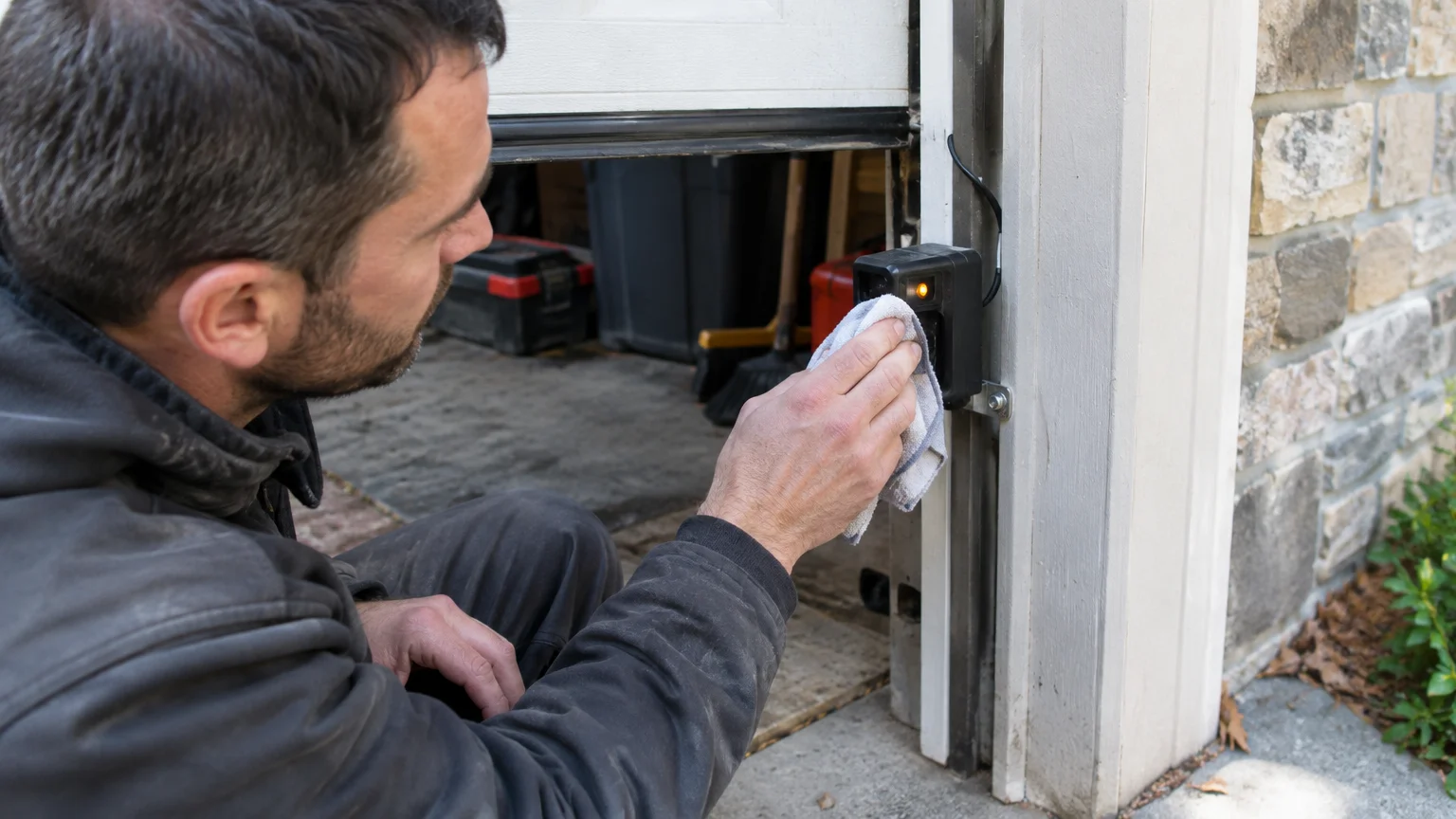
Dust and smudges can cloud a lens. Wipe the lens gently with a soft, dry cloth. Do not use a sharp tool or spray cleaner straight onto the sensor. If dirt does not come off with a gentle wipe, do not take the sensor apart. Force may damage the lens or its case.
Inspect sensor brackets, wiring, and connections
Look at the sensor brackets from a safe place. A sensor that hangs at an angle may no longer face the other side. Check whether a visible wire looks pinched, loose, or cut. Do not pull on it or try to join bare wires. Wire work can cause a shock or harm the opener.
Also check the floor and tracks for things that could stop the door. A door that leaves its tracks or moves unevenly is not a sensor-cleaning issue. Garage Door Off Track Repair is a separate repair, and the door should not be used until it has been checked. If the door is heavy, tilted, or partly open, keep people away. Do not try to guide it by hand.
How do I clean garage door safety sensors?
A homeowner can safely clean the exposed sensor lenses when the door is still and the area is clear. Use a soft, dry cloth and light pressure. Do not spray liquid into a sensor, pull its wires, or remove its case. If cleaning does not help, the cause may be alignment, wiring, or the opener itself.
Safe steps for cleaning the sensor lenses
First, make sure no one is using the door. Keep children and pets away from the opening. Use a clean, soft cloth to wipe each lens. Then look for cobwebs or dust around the sensors, without pushing or twisting a bracket. This is simple care, not a repair to the door’s moving parts.
After cleaning, see whether the lights look steady. A steady light can mean different things on different opener models, so check the manual. If the door still will not close, do not keep rubbing the lens or pressing the remote. Dirt may not be the cause. A dark sensor can point to a power, wire, or part fault.
How to avoid damaging the lens or wiring
Avoid rough cloths, strong cleaners, sharp tools, and anything that leaves lint. Do not soak the sensor or spray water toward it. Keep your hands away from tracks and moving parts. If a wire runs through a tight spot or looks worn, leave it alone. Do not tape or join it yourself.
You do not need a professional for gentle lens cleaning or moving a loose object away from the beam. Get help when a wire or bracket is damaged, or when the door still acts badly. In Easley, a technician can check the sensors and opener as one system instead of guessing at one part. Stop at once if the door moves without a clear command.
How do I realign garage door sensors?
Sensors need to face each other so the receiver can read the beam. A homeowner can check whether they look level and clear, but should not force a bent bracket or work near a moving door. If a light will not settle after a simple visual check, a technician can tell whether alignment, wiring, or a broken part is the cause.
How to adjust the sensors so they face each other
Look from one sensor toward the other. They should seem to point across the doorway, not toward the floor or wall. Check for a bracket that looks bent or loose, but do not pull hard on it. Keep the door still during a visual check, and keep fingers away from tracks and hinges.
If a sensor has been nudged, a small and gentle change may help it face the other sensor. Do not loosen parts you cannot identify, and do not use force. Stop if the bracket will not move easily or if wires become tight. A bent mount may need repair, not more adjustment. The opener manual can explain its light signals.
How to tell when the indicator lights show alignment
Many systems show a steady light when the receiver sees the beam, but the color and pattern depend on the model. Read the manual to check what the lights mean. If the receiver light stays off or keeps blinking, the beam may still be blocked or a part may have failed.
A door that closes once does not prove the sensors will keep working. The light should stay steady, and the door should move without stopping or reversing. Do not test alignment with a person or pet in the doorway. If the door closes only when a sensor is held or pushed, stop using it and get help. Sensor alignment is not worth an injury.
Why won’t my garage door close even when the sensors look aligned?
A door may not close even when the sensors seem to face each other. The cause could be an obstruction, track trouble, a wire fault, or an opener setting. A door that starts down and then reverses may be reacting to another safety or movement issue. Do not assume the sensors are broken just because the door will not close.
Other causes, including track obstructions and opener settings
Look for an object in the door’s path and along the tracks. A bent track, damaged roller, or crooked door can stop safe movement. Do not try to straighten a track or lift a heavy door. A door that is off track needs a trained repair, not more force from the opener.
The opener may also need attention if it stops or reverses while the sensor beam is clear. Settings can affect how far the door moves, but changing them without knowing the model can cause new problems. A remote or wall-control fault can also make the door seem unresponsive. Garage Door Opener Repair can help when the basic checks do not fix the issue.
When a closing problem may signal wiring or opener trouble
If sensor lights flicker, wires look damaged, or the opener makes a strange sound, stop testing. A loose connection can come and go, so the door may seem to work at times. The trouble may be inside the opener or along a wire path that is unsafe to reach. Leave the opener cover and wires alone.
A garage door that will not open may have a broken spring, cable, or opener. Do not try to lift it if it feels unusually heavy. Springs and lift cables hold strong force, and a failure can cause serious harm. Garage Door Cable Repair is work for a trained technician. Do not try to repair a panel or door part while the door is under force.
Can I bypass garage door safety sensors?
No. Bypassing garage door safety sensors removes a key safeguard that helps stop the door when something blocks its path. The door could then close on a person, pet, or object. Keep the sensors in place and working. If they do not work, leave the door unused until the problem is fixed.
How bypassing removes an important safety protection
The sensors help the opener know when something blocks the doorway. If the beam is defeated, the opener may not react as it should to an object. This can put people, pets, and property at risk. Never tape a sensor in place, cover its lens, unplug it, or use a device to fool the opener.
Some opener manuals describe a wall-control action for closing a door when the sensor system has a fault. That does not mean it is safe to ignore the fault. Follow the exact manual only if the system allows it, the doorway is fully clear, and you can watch the door. If anything is unclear, do not try it. A technician can explain safe next steps for the model.
Safer temporary steps when the door will not close
Keep people and pets away from the doorway. Move vehicles only when there is a safe way to do so. Do not stand under a door that may move. If the door is stuck open, secure the area and keep valuable items out of view. If it is stuck closed, do not force it upward.
Do not pull the emergency release if the door may be unbalanced or a spring or cable may be broken. The release separates the door from the opener, and a heavy door can fall. If the door needs to be secured, a technician can check it safely. The best short-term choice is to stay clear and arrange a repair, not defeat a safety feature.
How can I test whether the sensors are working correctly?
A homeowner can watch the sensor lights and observe a normal door cycle from a safe place. Keep the doorway clear, and never use a person, pet, or body part to test the beam. Stop if the door moves in an odd way, does not reverse as expected, or makes a harsh sound. A technician can do a full safety check.
Check sensor response during a normal closing cycle
Only watch a normal closing cycle when the area is clear and the door looks safe. Observe the lights from outside the door’s path. The door should move smoothly, and the sensors should keep their signal. If the door stops or reverses, do not repeat the test again and again.
Do not put an object where the door could crush it, and never stand beneath the door. Do not test by blocking the beam with your hand while the door moves. The opener manual may explain a safe test for that model. If you cannot find the manual or the directions are unclear, leave the test to a technician.
Stop testing if the door behaves unpredictably
Stop using the opener if the door drops, jerks, moves unevenly, or closes without a clear command. A sensor test cannot show that springs, cables, tracks, and the opener are all safe. Keep clear of a door that looks crooked or hangs partway open. A door under force can move without warning.
A technician can check the sensors along with the rest of the system. This matters at homes, shops, and other buildings where people pass through the door. Easley Garage Door Repair can help people, Smithfields, Glenwood, Liberty, Travelers Rest, Central, Williamston, and nearby areas understand a safe next step. Do not keep using the opener just to see if the problem goes away.
When should I call a garage door repair technician?
Call a garage door repair technician when cleaning and a clear path do not solve the problem, when wires or brackets look damaged, or when the door moves in an unsafe way. Professional help is also needed for springs, lift cables, bottom brackets, and doors that are off track. These parts can hold dangerous force and should not be repaired at home.
Signs the issue needs professional diagnosis
Get help if one sensor stays dark, a light keeps blinking, or the door reverses when the beam is clear. A technician should also check a door that is crooked, unusually heavy, noisy, or stuck. These signs may point to more than a sensor fault. A damaged spring or cable can make the door unsafe to move.
Spring and cable work is dangerous because these parts hold tension. A spring can release force without warning, and a cable can snap or pull loose. Bottom brackets connect to parts under tension, too. Do not remove, loosen, or adjust these parts. A trained technician has the right tools and skills to check and repair them.
What to do if the door is stuck open or closed
If the door is stuck open, keep people away from the opening and do not use it until it has been checked. If it is stuck closed, do not force it or try to lift it alone. Keep hands away from tracks and hinges. If the door is tilted, partly open, or hanging by a cable, move away and wait for help.
Key takeaways
- A yellow light can be normal on some opener models.
- A blinking light may mean the beam is blocked or unsteady.
- Gentle lens cleaning and a clear doorway are safe checks.
- Do not bypass sensors or work on springs and cables.
- Stop using a door that moves unevenly or without warning.
When a safe check does not solve the problem, the door needs a proper diagnosis. Contact us at Easley Garage Door Repair if the door will not close or may be unsafe. Do not force the door while waiting for help.
Frequently Asked Questions
Does a yellow garage door sensor light mean the sensor is broken?
Not always. On many systems, yellow is the normal light for the sending sensor. Check the opener manual to learn what the light means for that model. If the other sensor is dark, the door will not close, or lights keep blinking, there may be a blockage, alignment issue, wire fault, or failed part.
Why does my garage door close partway and then go back up?
The opener may sense that the safety beam is blocked or unsteady. Dirt, an object, or a sensor that has shifted can cause this response. A track or opener issue can also make the door reverse. Keep the doorway clear, and stop repeated tests if the door still acts oddly.
Can I clean garage door sensors myself?
Yes. Gentle cleaning is usually safe when the door is still and the area is clear. Wipe the exposed lenses with a soft, dry cloth. Do not spray cleaner, pull wires, or take a sensor apart. If the light still blinks or the door will not close, ask a technician to check it.
Should I bypass the sensors to close the door?
No. Bypassing the sensors can stop the opener from detecting a person, pet, or object in the doorway. Keep the system in place, and do not tape, cover, or unplug a sensor. If the door is stuck open or closed, keep people clear and arrange a safe repair.
When is a sensor problem actually an opener or door problem?
The trouble may be elsewhere if the beam is clear but the door still stops, reverses, or will not move. Damaged wires, a faulty opener, a bent track, or a broken spring can cause similar problems. Do not handle springs or cables. A technician can check the whole system and find the cause.
If you are unsure what is wrong, stop using the door if it acts unsafely. Contact Easley Garage Door Repair for help with a sensor or door that will not close.
If you are not sure what you are dealing with, it is worth having someone look at it before it turns into a bigger job. Get in touch with Easley Garage Door Repair today and we will tell you where you stand.