Garage Door Off Track Repair in Easley, SC
A door that has jumped its track is braced, guided back into place, and hung again on straight rail with good rollers, and the cause is corrected so it doesn't repeat.
Wheels outside the rail, a door that leans or jams, or a panel bowed where it caught: any of these means it is off track. In the Easley area, which straddles Pickens and Anderson counties, stop using it and leave the opener alone.
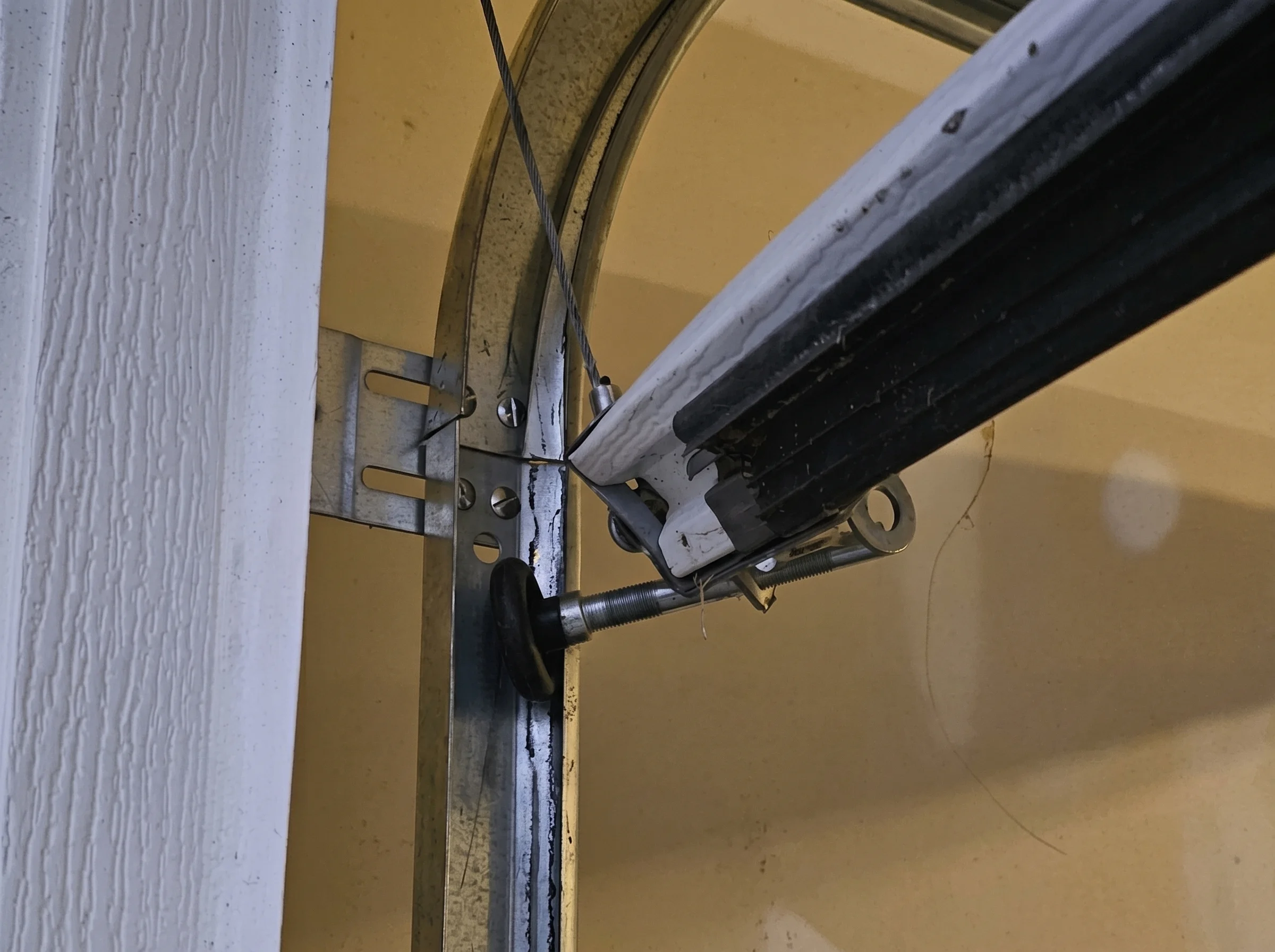
How a derailed door appears
A roller riding outside the rail, usually down low on the door or around the bend where the track turns up toward the ceiling.
The door leaning or wedged, frequently halfway open.
A panel bowed or creased where an opener shoved against a stuck door for too long.
A rail that is bent, dented, or pulled away from the wall.
Scraping, popping or grinding as it travels, right before it left the rail.
Door jumped the rail? Leave the opener off and say which side came out and what happened.
Contact UsWhat knocks a door out of its rails
A bumper strike
Backing into a shut door is the top cause, and it often bends the lower rail. Ice and sleet outnumber snow around Greenville.
A slipped or snapped cable
One corner drops, the door twists, and wheels pop free. A slack cable is covered on the cable repair page itself.
Rollers gone bad
A roller with a dead bearing skids instead of turning, then hops out at the first rough patch.
Rail loosened or bent
The brackets that anchor the rail to the wall loosen under years of vibration, and the rails drift apart until a wheel slips out.
An obstacle under the door
A garbage can, bike or mower caught as the door closes, particularly when the opener's force is set too high.
Secure the area
Keep the opener off
The motor keeps pushing, which can crumple panels or pull the rail off the wall.
Don't pull the emergency release while the door is partly open and out of its rail. It could fall or swing loose of the track completely.
Don't tap the rollers back in while the door bears weight. A derailed door still holds spring tension and can lurch without warning.
Stay clear of the door, and if a car is inside, mention that in your first message.
What the fix involves
The door gets braced so it can't drop or slide mid-job, and any spring tension is released or handled carefully first.
The damage is sized up
How many rollers, how much rail, whether panels are creased, and what set it off, a cable or a spring.
Rail is straightened or swapped
Small bends can often be trued; creased or torn sections get replaced.
Worn or broken rollers are replaced, and hinges are checked, because a cracked hinge will throw a wheel again.
The door is hung again in its rails, brackets tightened, and several full cycles run. Force and travel are reset and retested under the Consumer Product Safety Commission standard.
Describe what the door is doing
One or two sentences are enough to begin. You needn't know the name of the part that failed.
Wheels
Rollers are what make a door glide or grind, and they wear out long before the rest of the door does.
Plain steel rollers are the basic kind: they clatter, and they are hard on the rail as well as on themselves.
Nylon rollers with sealed bearings glide almost silently and need next to no oil.
A wobble, flat spots, cracked wheels or seized bearings mean it's time for new rollers.
If the door is noisy but intact, new rollers are often the bulk of the fix, and they're commonly done during a maintenance visit.
What shapes the price of off-track work
How far the door slipped
A pair of wheels at one corner, or a door dangling loose.
Rail damage
Straighten a rail or replace it, on one side or both.
Replacement rollers and hinges where worn.
Creased or cracked panels
A badly bowed panel may need replacing, and that can mean matching an older door's design.
A cable or spring failure that set the derailment off.
When one panel is beyond saving
A door that took a hard hit can have panels bent past straightening. Often one panel can be replaced and the rest kept, provided a matching panel is still sold for that model.
If not, or if many panels are hurt, garage door installation sets out the replacement choices ahead of you.
Frequently asked
Can I press the wheels back in by myself, safely?
Only if a single roller has slipped out low on a closed door, with straight track and a tight cable, and even then only sometimes. Beyond that, stop: the door is heavy, loaded with spring tension, and may move unexpectedly.
Why does one side keep jumping the rail?
Typically a rail nudged out of line, a slack bracket, or a cable on that side that's out of adjustment. Rehanging the door without curing the cause means it will jump out again.
Should the rails be oiled?
No. Rails should stay clean and dry because oil there traps dirt. Bearings, hinges and springs are the parts that take lubricant.
Other garage door work
Garage Door Cable Repair
Lift cables that fray, snap or slip, and doors that sag to one side.
Learn more →Garage Door Spring Repair
Snapped torsion or extension springs exchanged for ones sized to the door's weight.
Learn more →Garage Door Installation
Replacement doors in steel, wood, composite or glass, ordered to fit your opening.
Learn more →Contact us
Tell us where the door is stuck (closed, open or midway), which side jumped, whether anything hit it, and if a cable looks slack.
One photo of each side, taken from a few feet away, is the most useful thing you can send along.