A garage door opener problem may come from lost power, weak controls, blocked sensors, worn drive parts, or a door that cannot move safely. Simple checks may help, but broken springs, loose cables, heavy doors, and damaged tracks need trained help. Find the fault without forcing the system.
Table of Contents
- Why is my garage door opener not working?
- Could a power or control problem be stopping the opener?
- What does it mean when the opener runs but the door does not move?
- Why does the garage door reverse, stop, or close unevenly?
- How does cold weather affect a garage door opener?
- Can resetting the opener fix the problem?
- When should you call a garage door repair professional?
- Frequently Asked Questions
Why is my garage door opener not working?
A garage door opener may stop because it has no power, the remote has failed, or the door is stuck. A garage door opener is the motor and drive system that moves the door. Start by checking whether the unit responds at all.
Press the wall control once and listen. A light, click, hum, or motor sound can give useful clues. No response may point to power, wiring, a control, or a locked motor. A humming motor with no movement may point to a drive fault or a door that is too heavy.
How to tell whether the opener or the door is at fault
A door fault can look like an opener fault. The door may be off its tracks, stuck on a damaged roller, or held by a broken spring. The opener may stop to protect itself. Do not force a door that feels heavy or hangs at an angle.
The emergency release cord separates the door from the opener. It does not make a dangerous door safe. You may look for clear damage from the floor, but do not handle springs, lift cables, or bottom brackets. These parts can hold great force.
Safety checks before troubleshooting
Keep people, pets, and cars away from the door. Do not stand under a moving door. Keep hands away from hinges, rollers, and the drive rail. Check that the door is not locked and that nothing blocks its path.
Safe checks include confirming power, cleaning sensor lenses, replacing remote batteries, and looking for clear blocks. Easley Garage Door Repair helps Easley property owners separate simple control faults from issues that need Garage Door Opener Repair or Garage Door Off Track Repair.
Could a power or control problem be stopping the opener?
Yes. A tripped breaker, unplugged opener, damaged wall control, weak battery, or failed receiver can stop a sound system. These faults are common because several controls must work before the door moves.
Power supply, wall consoles, and circuit breakers
First, check whether the opener light works or the motor makes sound. Check the outlet and breaker panel without opening the motor housing. A breaker that trips again may show an electrical fault. Do not keep resetting it.
The wall console may be locked or damaged. Some consoles have a vacation or lock setting that blocks remotes. If the wall button works but the remote does not, the opener may have power while the remote needs help. If neither control works, the fault may be deeper.
Do not remove electrical covers or test live wires. A trained repair professional can check the control board, wiring, and receiver safely. This matters for homes, shops, and other buildings where a failed control can block access or create a security risk.
Remote controls, keypads, and signal interference
Remote batteries are a simple place to start. A remote may also lose its code after a control fault or battery change. A keypad can fail from worn buttons, a weak battery, moisture, or a wrong code.
Large metal objects, damaged antenna wires, and some devices can affect the signal. Test the remote from safe places without standing under the door. A universal remote must match the opener and be set up correctly.
A smart garage door opener may show an error in its app. That message does not prove the door is safe. The door, sensors, and drive parts still need a physical check. Easley Garage Door Repair can help identify whether the issue is a remote, keypad, receiver, or opener fault.
What does it mean when the opener runs but the door does not move?
When the motor runs but the door stays still, the trolley, gear, chain, belt, or screw drive may not transfer force. The emergency release may also be disconnected. A loud hum can mean the opener is working against a stuck or very heavy door.
Disconnected trolleys, worn gears, and stripped drive components
The trolley is the moving part that joins the opener rail to the door arm. If it is disconnected, the motor may run without pulling the door. A worn gear may make grinding sounds or leave plastic bits inside the housing. A belt can slip or break, while a chain can loosen or become damaged.
These parts need more than a quick look. The right repair depends on the opener model, door weight, drive type, and mounting hardware. A belt drive garage door opener may need different parts than a chain or screw drive system.
A homeowner can look for clear separation without opening the motor unit. Do not force, pull, or adjust the drive system while it has power. Repairs may involve stored force, moving parts, and alignment problems.
Why forcing the door can cause further damage
Forcing the door can bend tracks, damage rollers, pull fasteners from the frame, or strain the opener. It can also turn a small control fault into a larger repair. If the door is crooked, very heavy, or partly open, leave it still.
Do not pull loose cables or try to reconnect a spring. Garage Door Cable Repair and spring work need the right tools and training. The door may fall if a lifting part is disturbed. A professional can secure the door before testing the opener.
Why does the garage door reverse, stop, or close unevenly?
A door that reverses or stops may be reacting to its safety system or to resistance in the door. The opener should stop when it senses an unsafe condition. Dirty sensors, wrong travel settings, damaged tracks, and broken springs can cause similar signs.
Safety sensors and travel-limit settings
Safety sensors sit near the bottom of the door tracks. They send a beam across the opening. If the beam is blocked, dirty, misaligned, or affected by damaged wires, the door may refuse to close or reverse.
A homeowner can gently clean the sensor lenses and clear the beam path. Both sensor lights should show normal operation for that model. Do not bend, bypass, cover, or point the sensors away from the opening.
Travel limits tell the opener where the door should stop. If they change, the door may stop too soon, press too hard, or reverse. Setting them needs care because a wrong setting can affect safe stopping. The owner manual may explain basic programming, but damaged hardware needs service first.
Door balance, broken springs, and binding hardware
A balanced door stays close to its position when separated from the opener. A door that drops, rises, or feels very heavy has a mechanical fault. Broken torsion or extension springs are common causes. Rollers, hinges, tracks, and cables can also bind.
Springs, cables, and bottom brackets are hazardous parts. They hold stored force and can cause severe injury when handled the wrong way. This is not safe DIY work. Do not wind springs, remove brackets, lift cables, or change spring settings.
A door that closes unevenly needs attention before the opener is adjusted. Garage Door Maintenance can help limit wear, while Garage Door Off Track Repair may be needed when the door leaves its tracks. Do not use the opener until the door moves safely by hand.
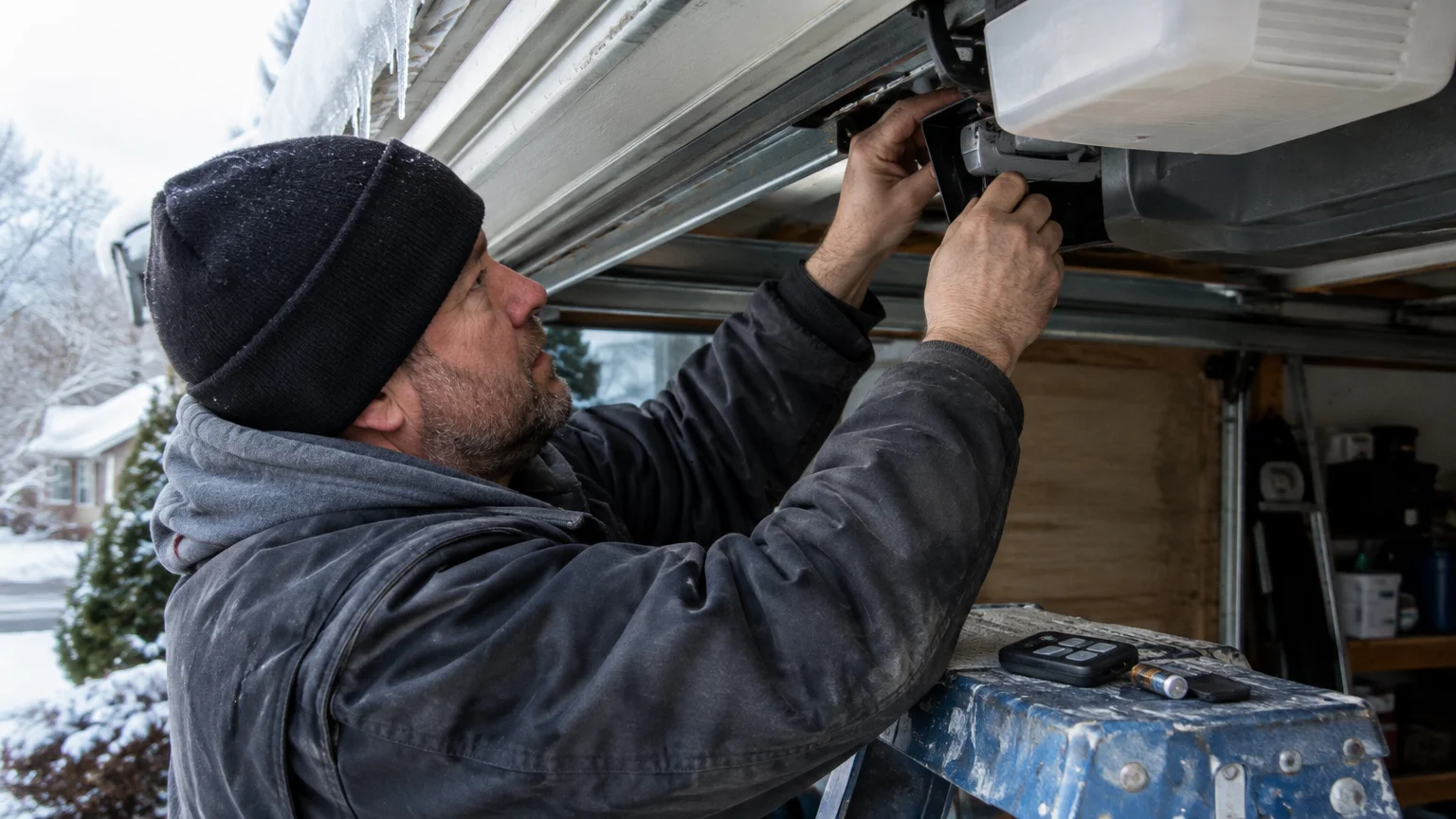
How does cold weather affect a garage door opener?
Cold weather can make a door harder to move. Rollers, seals, grease, and other parts may become stiff. Moisture can freeze at the floor seal and hold the door down. The opener may stop, reverse, or sound strained even when the motor is healthy.
Frozen seals, stiff rollers, and increased door resistance
A frozen garage door seal can stick to the floor or driveway. Trying to open the door can tear the seal or strain the opener. Ice may also collect around tracks or under the door. Clear the opening before testing it again.
Cold can weaken remote batteries and thicken old lubricant. Rollers may move poorly, and a weak spring may become more noticeable. These problems can affect belt drive, chain drive, and wall mount garage door opener systems.
A homeowner can look for ice, remove loose snow, and replace a weak remote battery. Do not use an open flame or pour hot water near electrical parts. Water can freeze again and create a larger problem.
Safe winter checks and when not to adjust components
The safest winter check is visual. Look for ice at the floor, blocked sensors, bent tracks, and loose visible hardware. Do not scrape hard against seals, pull the door upward, or run the opener again and again when the motor strains.
If the door stays heavy after the ice clears, the problem may involve springs, cables, rollers, or balance. Cold weather can reveal a fault, but it does not make dangerous repairs safe. A repair professional can inspect the full system and help prevent more strain.
Can resetting the opener fix the problem?
A basic reset may clear a short control error, but it cannot repair broken hardware, failed wiring, a bad motor, or an unbalanced door. Resetting may also erase remote and travel settings. Use it with care.
What a basic reset can and cannot resolve
A reset may help after a short power loss or control glitch. The process differs by brand and model. Follow the product manual and stay clear of the door while testing it.
A reset will not fix a broken spring, stripped gear, off-track door, failed sensor wire, or bent rail. It may hide the real fault for a short time. Stop testing if the opener trips the breaker, smells hot, grinds, or repeats the same failure.
Reprogramming remotes, keypads, and travel settings
Remote and keypad programming is usually safe when the door and opener are in good condition. Use the owner manual for the correct process. The learn button may be on the motor unit, and programming may remove older remotes from memory.
Travel settings need more care. They control where the door stops and how the opener responds to resistance. Wrong settings can cause impact, reversal, or unsafe pressure. Reprogramming should not replace a check of the door balance and safety sensors.
When should you call a garage door repair professional?
Call a professional when the door is stuck, heavy, crooked, noisy, off its tracks, or supported by damaged springs or cables. Prompt help also makes sense when the opener smells hot, trips power, grinds, or fails after safe checks.
Warning signs that require prompt service
The following signs should not be ignored:
- A broken or loose spring, cable, roller, track, or bottom bracket
- A door that falls, sags, binds, or will not stay in place
- A motor that hums, grinds, overheats, or trips the breaker
- Safety sensors that remain faulty after careful cleaning
- An opener that works only sometimes or leaves the door unsecured
Do not attempt torsion spring, extension spring, cable, or bottom-bracket repairs. These jobs involve stored force and can damage the door or cause serious injury. The same warning applies to forcing an off-track door back into place.
What an opener repair or replacement visit involves
A technician checks the door, tracks, rollers, springs, cables, sensors, controls, and opener drive. This helps show whether the opener caused the issue or reacted to a door fault. The repair may involve a control, remote, sensor, gear, belt, chain, or motor.
If the opener is worn or does not suit the door, replacement may be safer than repeated repairs. The choice depends on door size, use, noise needs, ceiling space, and available power. Belt drive, chain drive, and wall mount systems fit different settings.
The final cost depends on the parts, access, damage, urgency, and system type. A professional should confirm the work and final cost on a quote before repairs begin. Easley Garage Door Repair serves homeowners and property owners across Easley, including Smithfields, Glenwood, Liberty, Travelers Rest, Central, Williamston, and nearby areas.
Key takeaways
- A dead opener may have a power, remote, sensor, or door fault.
- A motor that runs without moving the door may have a drive problem.
- Springs, cables, and bottom brackets are not safe DIY repair parts.
- Cold weather can add resistance and reveal weak parts.
- Safe checks are fine, but force can make the damage worse.
Conclusion
Most opener faults leave clues. A silent unit points toward power or controls. A running motor with no movement points toward the trolley or drive. Reversing and uneven travel often point toward sensors, balance, tracks, or springs.
Safe checks can help narrow the cause, but they should never involve force or hazardous parts. For urgent help in Easley, Contact us when a garage door opener problem affects access, security, or safe use.
Frequently Asked Questions
Why is my garage door opener clicking but not opening the door?
Clicking may mean the wall control or remote is sending a signal, but the motor is not starting. It can also point to a weak power supply, failed relay, locked control, or motor fault. Check the outlet and remote battery safely. If the door is heavy or stuck, stop testing and seek professional help.
Can a garage door opener work with a broken spring?
The opener may run with a broken spring, but it should not lift the door. Springs carry much of the door’s weight. Using the opener can burn out the motor or damage the drive. A broken spring needs trained repair. Leave the opener unused until the door is safe.
Why does the garage door close and then open again?
The door may reverse because the safety sensors are dirty, blocked, or misaligned. It may also meet resistance from ice, a damaged track, worn rollers, or wrong travel settings. Clean the sensor lenses and clear the opening. Do not bypass the sensors or adjust hazardous door parts.
Is a smart garage door opener more reliable?
A smart opener adds app control, alerts, and remote monitoring. It still depends on sound door hardware, sensors, power, and internet service. Smart features do not prevent broken springs, off-track doors, or worn drive parts. Inspect the door when the system reports a fault.
Should a homeowner reset an opener before calling for help?
A homeowner may follow the maker’s basic reset directions when the door is in good condition and no dangerous damage is visible. A reset cannot repair springs, cables, tracks, gears, wiring, or a failed motor. Stop testing if the opener smells hot, trips power, or strains.
For more background on local service, see Easley Garage Door Repair.
If you are not sure what you are dealing with, it is worth having someone look at it before it turns into a bigger job. Get in touch with Easley Garage Door Repair today and we will tell you where you stand.