The phrase garage door opener how to program covers pairing a remote, car button, keypad, or universal control with the opener. Most systems use a learn button on the motor unit. The right steps depend on the brand, control type, battery, and vehicle system. Always test the door safely after pairing.
Table of Contents
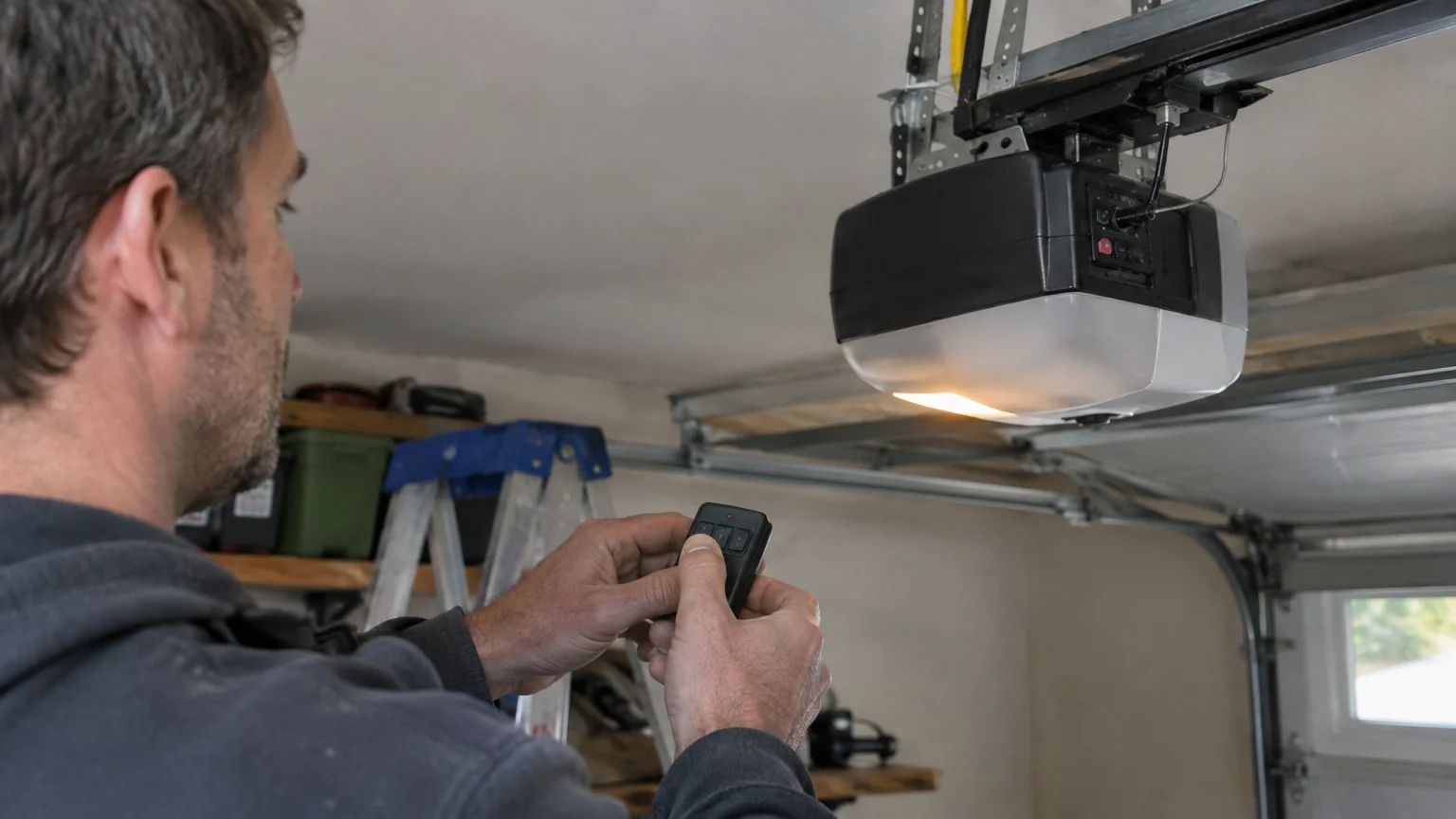
- How does garage door opener programming work?
- How do you program a standard garage door remote?
- How do you program a car’s built-in garage door button?
- How do you program a garage door keypad?
- How do you program a universal garage door remote?
- What should you do when a programmed remote does not work?
- How can you reset garage door remotes and keep the opener secure?
How does garage door opener programming work?
Programming teaches the motor unit to accept a signal from a control. The opener saves that control code in its memory. When the remote or keypad sends the right signal, the opener tells the motor to run. This limits access to people with approved controls.
What the learn or program button does
The learn or program button is often on the opener motor. It may sit near the hanging antenna wire or light cover. The button may have a colored light beside it. Pressing it starts a short pairing period for a remote, keypad, or vehicle button.
Light patterns and timing vary by brand and model. Check the owner’s manual before you begin. The manual lists matching remotes and keypads too. Some smart garage door openers use an app instead of a standard remote.
A remote sends a radio signal. A keypad sends a code after you enter it. A car button may learn the remote signal first, then send that signal later. These controls do not all pair in the same way.
Which remote, opener, and vehicle controls are compatible
Compatibility depends on the opener brand, model, radio system, and age. A remote that looks right may still use a different signal. The car may also need a system that supports the opener’s signal. Check the vehicle manual to see if a separate bridge is needed.
Easley Garage Door Repair can help Easley homeowners choose a control that fits. Local help is useful when the model label is hard to read or the manual is gone. It also helps when several controls stop working. The right match avoids failed setup attempts and keeps the door secure.
How do you program a standard garage door remote?
A standard remote is usually paired with the opener’s learn button. You then press the chosen remote button. You do not need to work on springs, cables, or other loaded parts. Programming is low risk when you follow the manual and keep people away from the moving door.
Steps for pairing a remote with the opener
- Find the opener model information. Look for a label on the motor, rail, or remote. Write down the brand and model before choosing instructions.
- Check the remote battery. Install the right battery and make sure it sits firmly. A weak battery can make pairing fail.
- Place the remote near the opener. Keep the door area clear. Children, pets, and cars should stay away from the opening.
- Press the learn or program button. Use the manual to see how the light shows pairing mode. Do not press random buttons again and again.
- Press the chosen remote button. Hold it as the manual says. The opener light should show that the signal was saved.
- Wait for pairing mode to end. Some systems leave this mode quickly. If it ends early, follow the model instructions before trying again.
How to confirm the remote works safely
Stand where you can see the whole door. Press the remote once and watch the door move. Never stand below the door or drive under it during a test. Press the control again if the manual says it should stop or reverse.
Keep the photo-eye safety sensors clear. These sensors sit near the floor on both sides of the opening. If the door will not close, look for blocked lenses, loose wires, or poor alignment. Never bypass the sensors. Easley Garage Door Repair can inspect the opener when a remote pairs but the door still moves poorly.
How do you program a car’s built-in garage door button?
A car’s built-in garage door button often needs the original handheld remote. The car first learns the remote signal. The opener may then learn the car button, based on the vehicle and opener system. The vehicle manual gives the exact button order.
Why the original remote may be needed
Many vehicle systems copy the signal from a handheld remote. The remote usually needs to sit close to the car buttons during setup. A good battery matters because the car cannot learn a weak signal well.
Some newer cars use another system. They may connect through a built-in bridge or need a separate compatibility device. A vehicle dealer, opener maker, or trained technician can confirm the setup. Guessing may erase a working control or confuse the pairing process.
How to pair the vehicle buttons with the opener
Park the vehicle outside the door’s path. Keep the engine off unless the vehicle manual says otherwise. Follow the car instructions to train the selected button with the handheld remote. The indicator light often changes when the car learns the signal.
Next, use the opener’s learn button if direct pairing is needed. Press the chosen car button as the opener manual directs. Test it with the door fully visible. The button should start or stop the opener without delay, while the safety sensors still work normally.
A failed setup may come from a weak remote battery, an unsupported opener, or a car memory problem. A smart opener may also need account access or app setup. Garage Door Opener Repair can help when a car button works only sometimes, loses its pairing, or operates another door by mistake.
How do you program a garage door keypad?
A keypad is programmed by placing the opener in learn mode and setting an entry code. Choose a code that is easy for your household to remember but hard for others to guess. Test the keypad while the door area stays clear.
Setting or changing a keypad code
Read the keypad and opener manuals first. Older keypads may use small switches. Newer models may use a learn button and code sequence. The steps are not the same for every model, so the model number matters.
Do not use an address, phone number, birth date, or other public detail. Enter the code only when the keypad is ready. If the light does not respond as expected, stop and check the manual. Pressing many combinations can make the process harder to follow.
A code change may remove an old code or add a new one. Know which result applies before you start. If a former resident, tenant, worker, or family member still knows the code, changing it is a useful security step.
Testing the keypad and securing access
Test the keypad from a safe place with the door fully visible. Enter the code and use the open or enter button as directed. Make sure the door starts moving, then test closing with no person, pet, or item below it.
Keep the keypad cover closed when not in use. Wipe dirt and moisture away with a soft, dry cloth. Do not spray cleaner into the buttons. If the keypad works only nearby, check its battery and inspect the opener before assuming the code is wrong.
A keypad that opens the door without the right code needs quick attention. The code may not have saved, or the keypad may have a fault. A technician can check the control, opener memory, wiring, and security settings without disturbing spring or cable parts.
How do you program a universal garage door remote?
A universal garage door remote works with some opener brands and models. It does not work with every system. Check the package or manual for supported openers before pairing it.
Checking compatibility before programming
Find the opener brand and model on the motor unit. Compare it with the universal remote’s list. The opener age, radio system, security type, and learn-button color may affect the match. A remote made for the same brand may still use a different system.
Use a new battery or one that you know works. Remove old batteries safely and use the type listed in the remote manual. Keep the remote away from other controls during setup. This makes it easier to see which signal the opener saved.
Some universal remotes control more than one door. Pair each button with the correct opener. Labeling the buttons can help prevent the wrong door from opening in a shared garage or business.
Common pairing methods for universal remotes
Many universal remotes use a learn-button method like the original remote. Others use a brand code, switch setting, or both. Follow the manual for the exact opener.
After pairing, test the remote from safe positions. The door should respond in a steady way. Short range, delayed response, or another opener moving may point to interference, a poor match, or a memory issue.
Do not open the motor housing or change wiring to make a universal remote work. These actions can cause shock, control, or security risks. If a listed compatible remote still fails, Garage Door Opener Repair can test the remote and opener together. Easley Garage Door Repair serves property owners in the main Easley area, including Smithfields, Glenwood, Liberty, Travelers Rest, Central, Williamston, and nearby communities.
What should you do when a programmed remote does not work?
Start with simple checks before assuming the opener needs major repair. A dead battery, blocked sensor, locked wall control, or weak signal can stop a programmed remote. If the door is heavy, crooked, noisy, or stuck, the issue may involve the door hardware instead.
Battery, range, and signal troubleshooting
Replace the remote battery with the correct type. Check for corrosion, a bent contact, or a loose battery cover. Try the wall control when it is safe. If the wall control works but the remote does not, focus on the remote, pairing, or range.
Make sure the opener has power. Check whether the motor light turns on and whether other controls respond. Keep the remote away from metal objects, thick walls, and possible signal interference while testing. A keypad may need a fresh battery and clean buttons.
Look at the photo-eye sensors near the floor. Both lights should show normal alignment under the opener manual. Clear leaves, boxes, and cobwebs from the sensor area. Never move, cover, or bypass the sensors to force the door shut.
When the opener, remote, or wiring may need repair
A remote may pair but still fail because the opener receiver is damaged. Loose low-voltage wires, a failed wall control, worn gears, or a faulty control board can also stop normal operation. A door that hums, reverses, lifts unevenly, or will not move needs more than programming.
Do not adjust springs, lift cables, or bottom brackets during remote troubleshooting. These parts hold strong force and can cause severe injury if they move suddenly. A trained professional uses the right tools and checks door balance before working on loaded parts.
Garage Door Opener Repair is worth considering when basic checks do not solve the problem. If the door is off track, damaged, or unsafe, Off Track Repair or another suitable repair may be needed. Easley Garage Door Repair can help find whether the fault is in the control, opener, wiring, or door.
How can you reset garage door remotes and keep the opener secure?
Resetting an opener can remove stored remotes, keypads, and vehicle controls. It helps after a lost remote, change in occupants, or security concern. The reset method differs by model, so confirm what it will remove before starting.
When to erase old remotes and codes
Erase old controls when a remote is lost or someone who should not have access knows the keypad code. A reset may remove every stored control instead of one device. Gather current remotes first and plan to pair them again afterward.
After a reset, test each approved remote, car button, and keypad. Remove unknown controls from your household list. Keep spare remotes in a secure place. For smart openers, review user accounts, shared access, and app permissions too.
Good upkeep also helps. Replace weak batteries, keep sensor lenses clean, and watch for changes in range or response. A door that needs repeated commands may have an opener or wiring problem. Routine Garage Door Maintenance can help find problems before the door becomes hard to secure.
When professional garage door opener help is safer
Professional help is safer when the opener has no power, the door is stuck, the rail is damaged, or wiring looks loose. It is also needed when springs, cables, or bottom brackets may be involved. These parts are under force and should not be adjusted through a home how-to guide.
A qualified technician can match a remote, check the receiver, inspect the safety sensors, and test door movement. The final cost is confirmed on a quote after the needed work and parts are clear. Opener repair is often a smaller job than replacing a full door, but damage, access, and urgency affect the work.
Frequently Asked Questions
Can a homeowner program a garage door remote without professional help?
Yes. Many homeowners can pair a compatible remote by following the opener manual. Battery checks, sensor cleaning, and simple programming are usually safe. Professional help is needed when the opener has wiring faults, the door is unsafe, or springs, cables, and brackets may be involved.
Why does the remote light work but the garage door stay closed?
The remote light only shows that its button has power. It does not prove that the signal reaches the opener or that the opener can move the door. Check pairing, opener power, sensors, locks, and the wall control. A heavy or stuck door needs a professional inspection.
How do you program a garage door opener with a universal remote?
First, confirm that the universal remote supports the opener model. Then follow the remote method, which may use a learn button or brand code. Test one button at a time. If pairing fails after the correct steps, the remote, receiver, or opener memory may need testing.
Can a keypad and remote use the same garage door opener?
Yes. Many openers can store several approved controls. The keypad and remote normally use separate setup steps, but both communicate with the same motor unit. Keep each code and control secure. If one control opens the wrong door, erase stored settings and pair each device again.
When should someone call for garage door opener help?
Get help when the door is stuck, off track, noisy, uneven, or unsafe. Professional service is also wise when wiring, the receiver, springs, cables, or bottom brackets may be involved. Do not bypass safety sensors or adjust loaded hardware to solve a programming problem.
Key takeaways
- Use the opener manual because steps differ by model and control type.
- Check batteries, power, sensors, and compatibility before repeating setup attempts.
- Test every control safely with the door visible and the path clear.
- Reset lost remotes and old keypad codes to protect home or business access.
- Leave springs, cables, brackets, and unsafe doors to trained professionals.
A working remote is only one part of safe garage access. The opener, sensors, door hardware, and security settings must work together. Contact us today for urgent garage door opener help from Easley Garage Door Repair.